
A New World Order?
James examines Mark Carney’s speech to the World Economic Forum and guest writer Elif Sarican gives context to the deadly assault on Rojava, Kurdistan.
Hello readers/listeners,
From Venezuela to Greenland, Tehran and back again, 2026 has begun with a bang. Over the past few weeks on MACRODOSE, we’ve been pulling at the loose threads of a rapidly changing global order - zooming out to make sense of the new world emerging from the ruins of unipolarity.
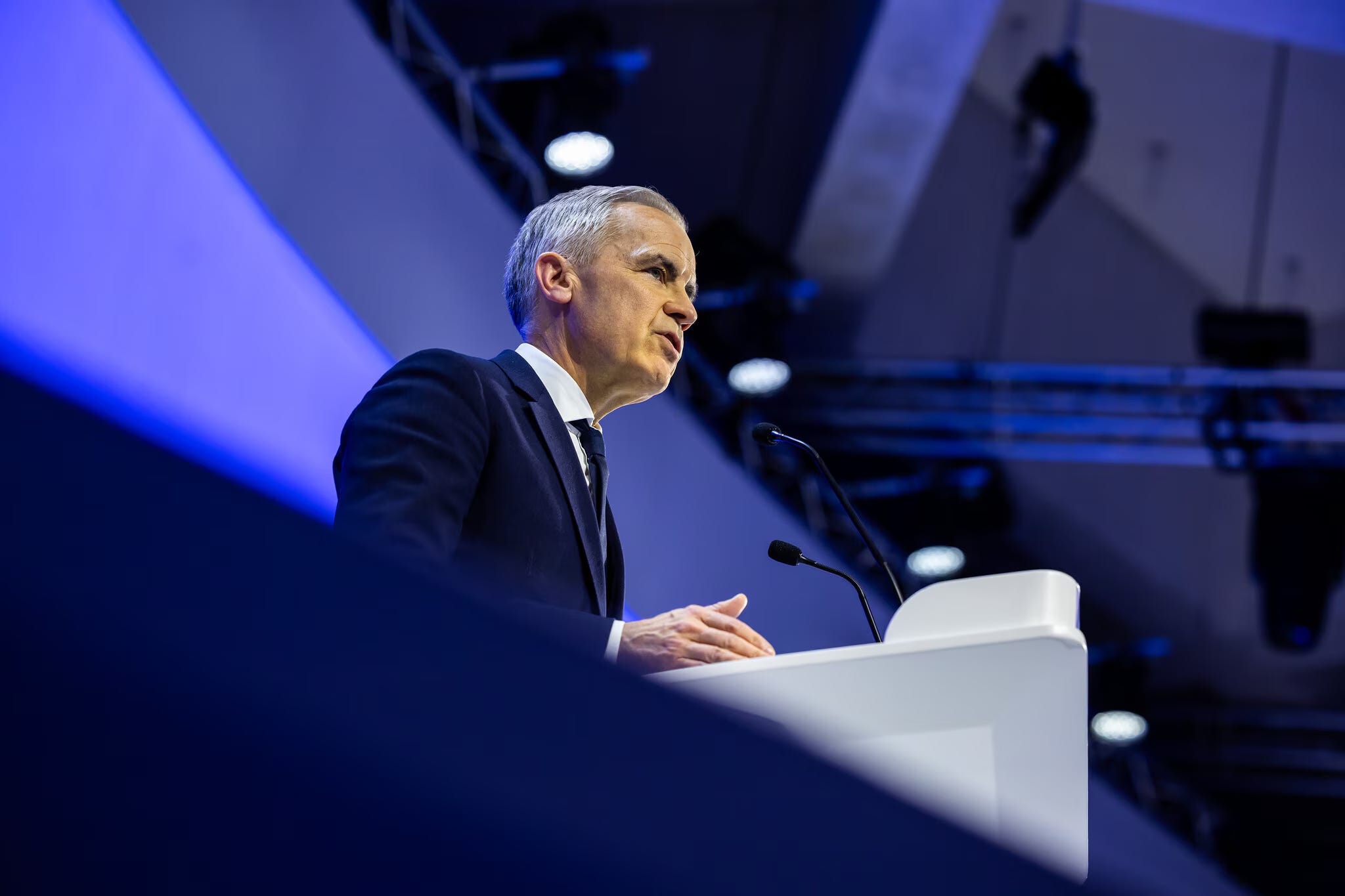
This week on the show, we examined Canadian Prime Minister Mark Carney’s recent speech to the World Economic Forum in Davos. Carney called on the world’s so-called “middle powers” to coordinate and defend their interests in the face of what he described as a “rupture” in the global order.
As James argues, the speech marked more than diplomatic repositioning. It’s a tipping point, the moment when a break with the past becomes undeniable in elite establishment circles. The suspension of disbelief is over. The idea that globalisation, markets, and multilateral institutions would quietly smooth over power politics has finally collapsed in plain sight.
And these big-picture geopolitical shifts aren’t abstract. They’re producing devastating consequences on the ground. Nowhere is this more apparent than in Rojava, Kurdistan. In recent weeks forces operating under the authority of Syria’s Transitional Government, led by Ahmed al-Sharaa have escalated attacks against the democratic experiment in North and North-East Syria.
As writer, editor, and host of Amargi Mosaic, Elif Sarican writes in this month’s Guest Note (below): “What is at stake now is the future of Syria itself, the position of the Kurdish people in the region, and what political design we accept for the Middle East”.
The deadly fallout of a fast-shifting geopolitical terrain is evident everywhere, and Elif’s piece is essential context for a conflict with profound consequences for progressives globally - and one that remains significantly under-reported in the mainstream press.
As ever, we’ll keep you covered at MACRODOSE, with new round-up episodes dropping into your feed each week — and a huge thank you to our brilliant Patreon community, whose support keeps this project alive and thriving.
▦ THE BREAK—DOWN
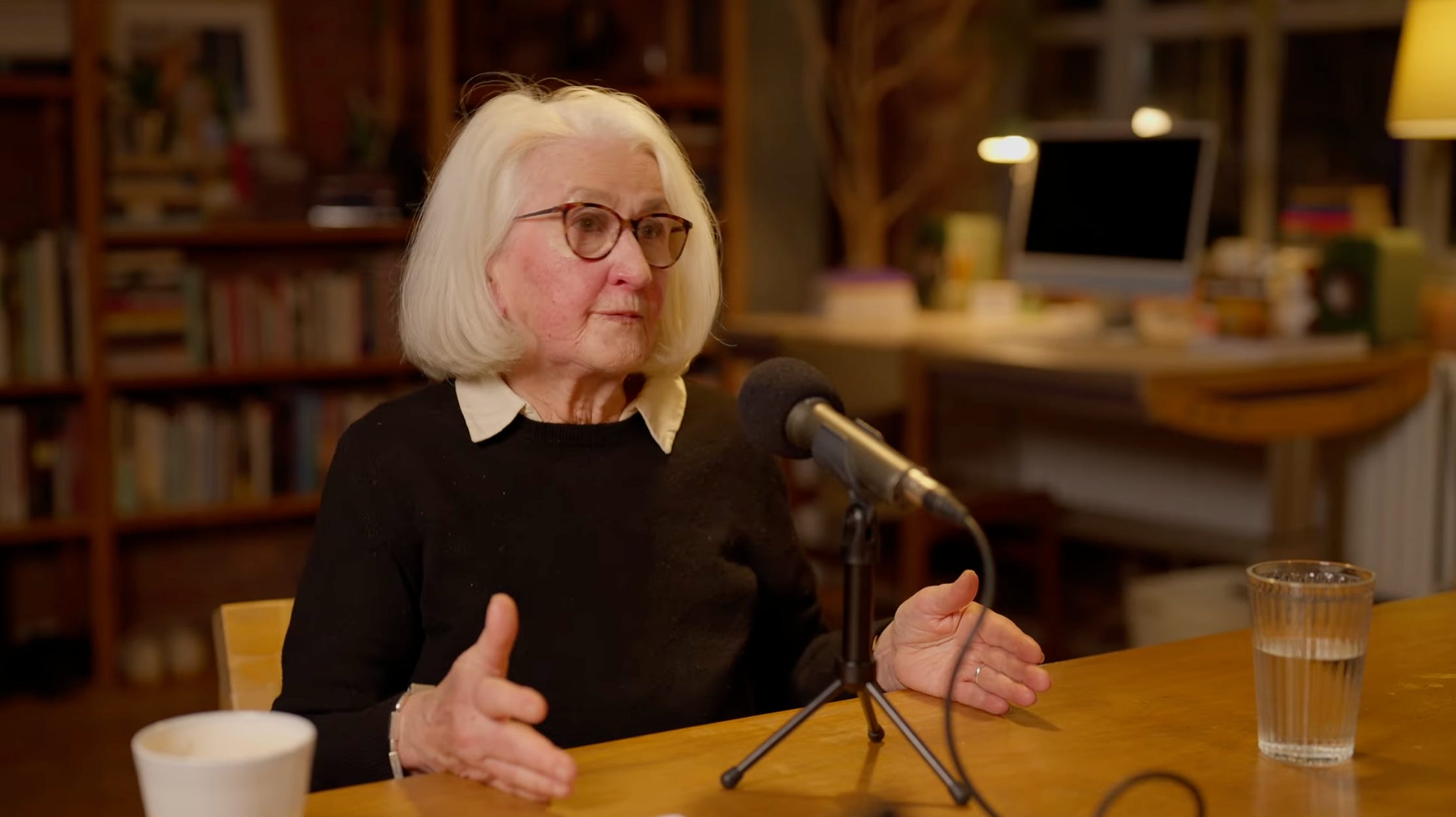
A quick note to point you toward the latest episode of the BREAK—DOWN. This week Adrienne Buller was joined by Ann Pettifor to discuss Ann’s new book, The Global Casino: How Wall Street Gambles with People and Planet. It’s a gripping read that traces the extraordinary power of modern finance, revisits Keynes’s legacy, and asks a deceptively simple question: what is money, really?
Listen to or watch the full episode here.
▦ GUEST NOTE
(This month’s host note is from Elif Sarican, a writer, editor, and host of The Amargi Mosaic, an interview show with The Amargi)
Since 2011, Syria has been a playground for every major international power - UK, Russia, Iran, the US, Israel and Turkey, each pursuing its own interests while the country bled. Amid the carnage, one region built something different. In the north and north east, in the territory known as Rojava in Kurdish, a democratic experiment took root. It became a beacon of possibility in the wreckage, proof that even in the worst conditions, people can organise another way of life.
Kobane, the city that turned the tide against ISIS in 2015, where Kurdish women fighters became the symbol of a generation’s hope, has in recent days been encircled by the forces of Syria’s new rulers and the drones of Turkey, NATO’s second-largest army.
Since December 2024, the majority of Syria has been controlled by the Syrian Transitional Government, led by Ahmed Al-Sharaa (formerly Abu Mohammad al-Jolani), whose Hay’at Tahrir al-Sham emerged from al-Qaeda’s Syrian affiliate. Though the US, represented by Tom Barrack, has publicly brokered several ceasefires, HTS forces backed by Turkish airpower and tacit greenlight by the US, EU and UK, continued their attacks against Rojava.
The economy has been reorganised around cooperatives designed to meet community needs rather than extract profit. This is lived reality, constructed in the middle of a warzone.
For those unfamiliar: Rojava is not only “Kurdish-controlled territory.” Since 2012, rooted in the philosophy of the Kurdish Freedom Movement, its people have built a society based on women’s liberation, radical democracy, ecology, and genuine multi-ethnic coexistence. Arabs, Kurds, Assyrians, Armenians, Turkmens: living and governing together through nested communes and councils, with women’s leadership mandated at every level. The economy has been reorganised around cooperatives designed to meet community needs rather than extract profit. This is lived reality, constructed in the middle of a warzone. Though many claim an alliance between Rojava and the US, that relationship has always been limited military cooperation with the Syrian Democratic Forces (SDF) out of necessity.
The SDF is a multi-ethnic coalition of Kurdish, Arab, Assyrian, Turkmen and Armenian fighters formed in 2015, with the YPG and YPJ at its core. They defeated the ISIS caliphate with minimal international ground support while Western powers contributed airstrikes.
What is at stake now is the future of Syria itself, the position of the Kurdish people in the region, and what political design we accept for the Middle East. The initial ceasefire terms put forward by Damascus included full handover of Raqqa, Deir ez-Zor and Rojava, with all SDF personnel integrated into Syrian state structures on an “individual basis”. This would mean no collective recognition, no autonomy, no political status for Kurds as a people. Just absorption into a centralised state that will not tolerate alternatives. Senior Kurdish negotiator Foza Yusuf was blunt: “They are imposing surrender.”
The agreement signed this week brings the SDF into the Syrian Arab Army as distinct brigades. The aim is for the attacks to stop, but the question of a democratic Syria is still precarious. While Damascus will now assume overarching administration across North-East Syria, the agreement formally commits to non-interference in local governance - including the Kurdish co-chair system, a cornerstone of women’s liberation. Whether these provisions are honoured in practice, however, remains an open question.
Since taking power, Al-Sharaa, encouraged by Turkey, legitimised by the US and UK, has vehemently opposed any federal or decentralised Syria, arguing it would make the country “weak.” HTS forces have attacked Alawite and Druze communities since December 2024. Meanwhile, the EU has pledged €620 million to help Al-Sharaa “rebuild” Syria — financing a government that oppresses minorities and systematises ISIS ideology under a reformist neoliberal veneer.
Turkish President Erdoğan never accepted that Kobane didn’t fall to ISIS in 2015. When ISIS besieged the city, Turkey sealed its border, blocked Kurdish reinforcements, and actively facilitated the flow of fighters and resources to ISIS. Kobane’s survival was understood as a strategic humiliation for Ankara. What we are witnessing now is its planned resolution.
We must be clear about why Rojava is under attack. It is not because democratic confederalism has “failed”, the system works, and that is precisely the problem. Rojava represents the threat of a good example: proof that an alternative to the grim fate prescribed for the Middle East is possible. Its survival also matters for Syria’s other minorities - Assyrians, Armenians, Druze, Alawites - for whom Rojava has represented a guarantor of coexistence in a region where such guarantees are vanishing.
International media amplifies the attempted erasure. Al Jazeera has been rebranding captured ISIS women as naïve victims and platform fighters claiming there were never any ISIS members in SDF prisons. Middle East Eye runs articles claiming the threat of ISIS was exaggerated to begin with. History rewritten in real time.
Rojava represents the threat of a good example: proof that an alternative to the grim fate prescribed for the Middle East is possible.
On the ground, people are mobilising. Community Defence Forces coordinate weapons distribution and neighbourhood patrols. Hundreds at Nusaybin (North Kurdistan/South East Turkey) have attempted to break through the Turkish border to join the defence. The Kurdish freedom movement has issued its most significant call for popular resistance in recent memory.
The people of Rojava are clear about what they are defending. We have a responsibility not only to defend Rojava but to go beyond: to demand the political recognition of Kurdish self-determination. If Rojava falls, the message will be that no alternative is possible. We cannot afford to let that stand.
For those in the UK, follow and support the Kurdistan Solidarity Network (kurdistansolidarity.net). If you’re an active trade unionist, connect with the Kurdistan Solidarity Campaign, which is organising in the British labour movement.
Follow Elif Sarican on Instagram and X/Twitter.
▦ FURTHER READING
(A list of sources, recent articles and essential reading.)
Read: Japan bond volatility could trigger up to $130B US Treasury selling [Bloomberg UK]
Read: The Guardian’s editorial view on food security in the UK: “As climate and geopolitics shocks bite, countries are rebuilding food buffers [but] the UK clings to neoliberal ideas while households pay the price” [The Guardian]
Read: Recent UK government analysis exploring how global biodiversity loss and the collapse of critical ecosystems could affect the UK’s resilience, security and prosperity. [Gov.uk]
Read: “Mamdani-style” public food stores to be opened in bulgaria following successful consumer boycott in protest at high prices [Trade Magazin Hungary]
Read: “The UK must plan for a financial crisis that would be triggered if the US government announces that aliens exist, a former Bank of England expert has said.” [The Independent]
Read: Why Trump pulled back from invading Greenland – White House officials understood that an economic and financial meltdown would follow any military seizure of Denmark’s territory. [Washington Monthly]
Listen: Politics Theory Other is joined by Sarah Jaffe to look at the political background to the current situation in Minneapolis [Politics Theory Other]
Listen: James Meadway joins Carys Afoko to discuss Trump's ambitions for gaining Greenland, the demise of the British Conservative party, China & India's coal production and Davos. [Over The Top Under The Radar]
Listen: Paris Marx is joined by Chris Person to explore the state of hardware and manufacturing in the tech industry, ways to hack your stuff, options to undermine Microsoft’s software dominance. [Tech Won’t Save Us]
Listen: “A deep exploration of the political economy of AI: the fulcrum of the authoritarian tech oligarchy—and of global contests for economic and military dominance.” [The Dig]
Caught something we missed? Let us know what you’ve been reading/watching/listening to this month down in the comments?
▦ BOOK CLUB

The Political Thought of Abdullah Ocalan by Kurdistan, Woman’s Revolution and Democratic Confederalism
These are the essential writings of a man who inspired a new, egalitarian socialist regime in the Middle East, which is currently fighting for survival against religious extremism and state violence.
Abdullah Ocalan led the struggle for Kurdish liberation for more than 20 years until his capture in 1999. Now, writing from prison in Turkey, he has inspired a new political movement. Called Democratic Confederalism, this revolutionary model is developing on the ground in parts of Syria and Turkey; it represents an alternative to religious sectarianism, patriarchy, capitalism and chauvinistic nationalism, providing the blueprint for a burgeoning radical democratic society.
This selection of Ocalan's writings is an indispensable introduction for anyone wanting to engage with his political ideas. His central concepts address the Kurdish question, gender, Democratic Confederalism and the future of the nation. With The Political Thought of Abdullah Ocalan, his most influential ideas can now be considered and debated in the light of his continuing legacy, most notably in the ongoing revolution in Rojava.
Find the MACRODOSE ESSENTIALS reading list over on our bookshop.org page here, along with book suggestions from past guests on the show. You’ll also be able to buy the books from the list AND at the same time support the show - for every book you buy via our reading lists, bookshop.org gives us 10%. Treat yourself and stock up on some new additions to your bookshelf!
▦ MERCH
Check out what we’ve got in stock over on the MACRODOSE merch store here. As a special thank you, we’re offering subscribers 15% off our merch. Use the code MACRO15 at the checkout.
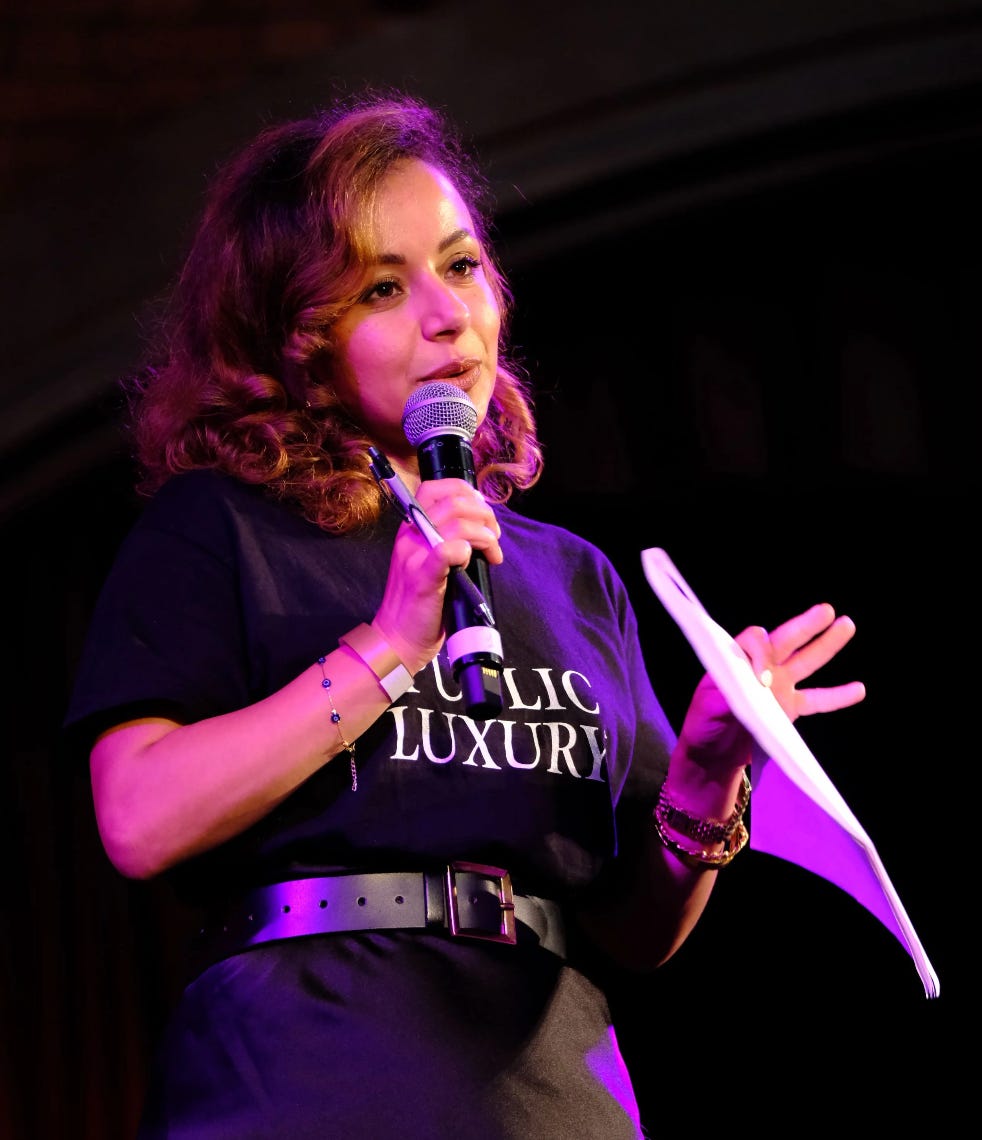
Every purchase helps support the podcast and ensures we can keep delivering insights and analysis in 2025. Together we are building a new era of independent, people-powered economics media!
▦ AOB
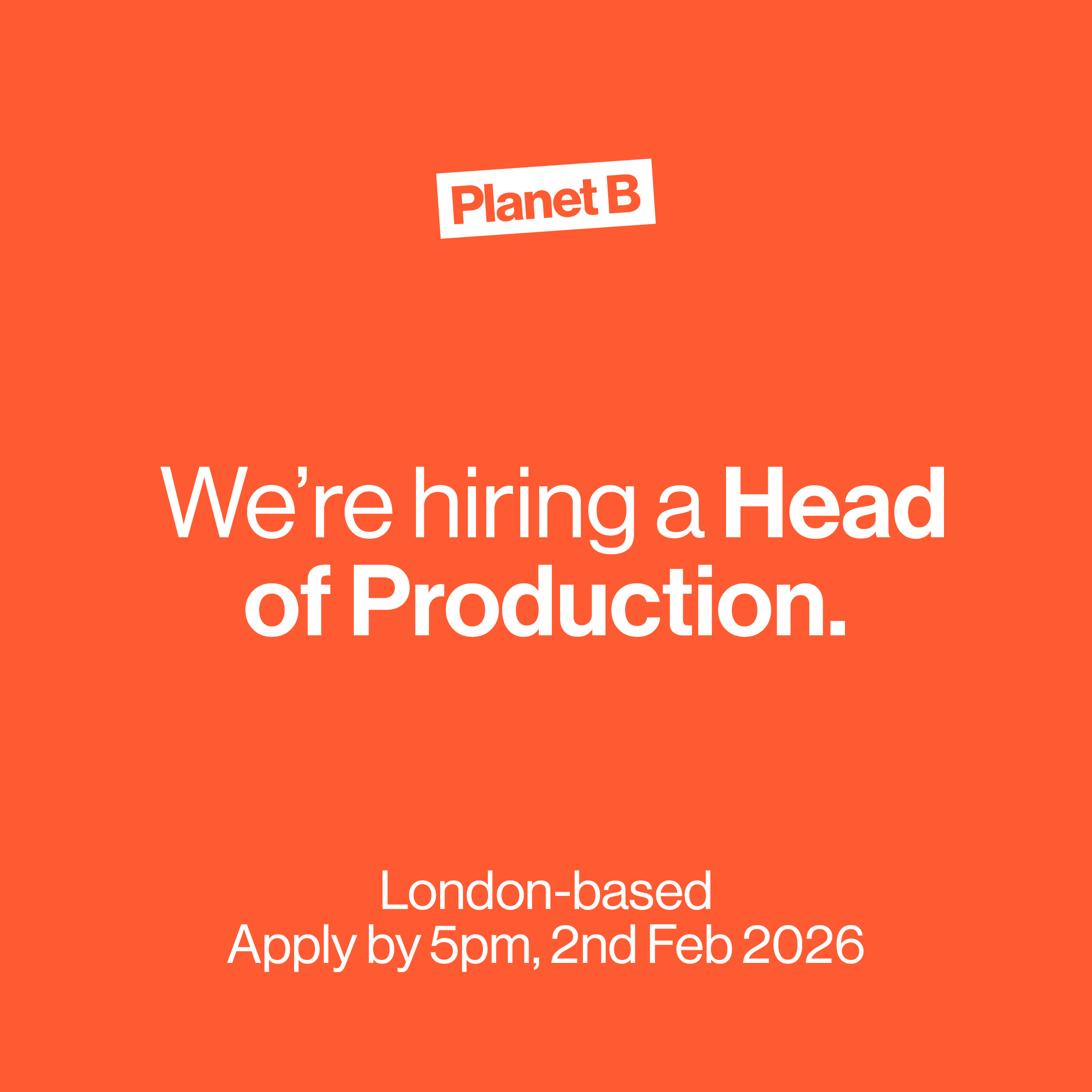
Planet B – the production company behind MACRODOSE – is hiring a Head of Production, and there’s only a couple days left to apply!
This is a senior, hands-on role overseeing production across our audio, video and live events - from budgets and schedules to crews, workflows and delivery. You’ll be responsible for keeping projects running smoothly, leading freelancers and collaborators, and helping shape how Planet B scales its production output.
If that sounds like you or someone you know, head over to planetbproductions.co.uk to read the full job description.
Brilliant. The point about how 'geopolitical shifts aren’t abstract' and cause 'devastating consequenses' is so crucial. That's the real impact.